As we age, staying active becomes more important than ever. For men over 50, functional fitness offers a practical approach to exercise that focuses on movements we use in everyday life.
These exercises help maintain muscle mass, improve balance, and increase mobility—all crucial factors as our bodies naturally change with age.
Functional strength training is one of the best interventions for people over 50 to fight bone and muscle loss, increase longevity, prevent falls, and boost metabolism.
Rather than isolating muscles like traditional weightlifting, functional fitness emphasizes movements that serve a purpose in daily activities, like bending, lifting, and climbing stairs.
We’ve found that incorporating 6-7 key functional movements into your routine can make a remarkable difference in how you feel and move.
Activities like walking, swimming, and cycling provide excellent low-impact options, while targeted strength exercises help maintain the fundamental movement patterns we need to stay independent and active as we age.
Understanding Functional Fitness After 50
Functional fitness helps men over 50 maintain independence and quality of life. It focuses on exercises that mirror everyday movements, making daily activities easier and reducing injury risk.
Benefits of Staying Active Later in Life
Staying active after 50 isn’t just about looking good—it’s about living well. Regular exercise helps fight muscle and bone loss that naturally occurs as we age.
Research shows that strength training is one of the best interventions for people over 50. It boosts metabolism, which often slows down in our later years.
Exercise also helps manage common health issues like high blood pressure and arthritis. Many men find their blood pressure improves with consistent activity.
Perhaps most importantly, staying fit increases longevity. We can add quality years to our lives through regular movement.
Functional fitness also reduces fall risk—a major concern as we age. Better balance and strength mean fewer accidents and more confidence in movement.
Key Components of Functional Fitness
Strength training using compound movements forms the foundation of functional fitness. These exercises work multiple muscle groups at once, similar to real-life movements.
Exercises should include:
- Squats (mimics sitting/standing)
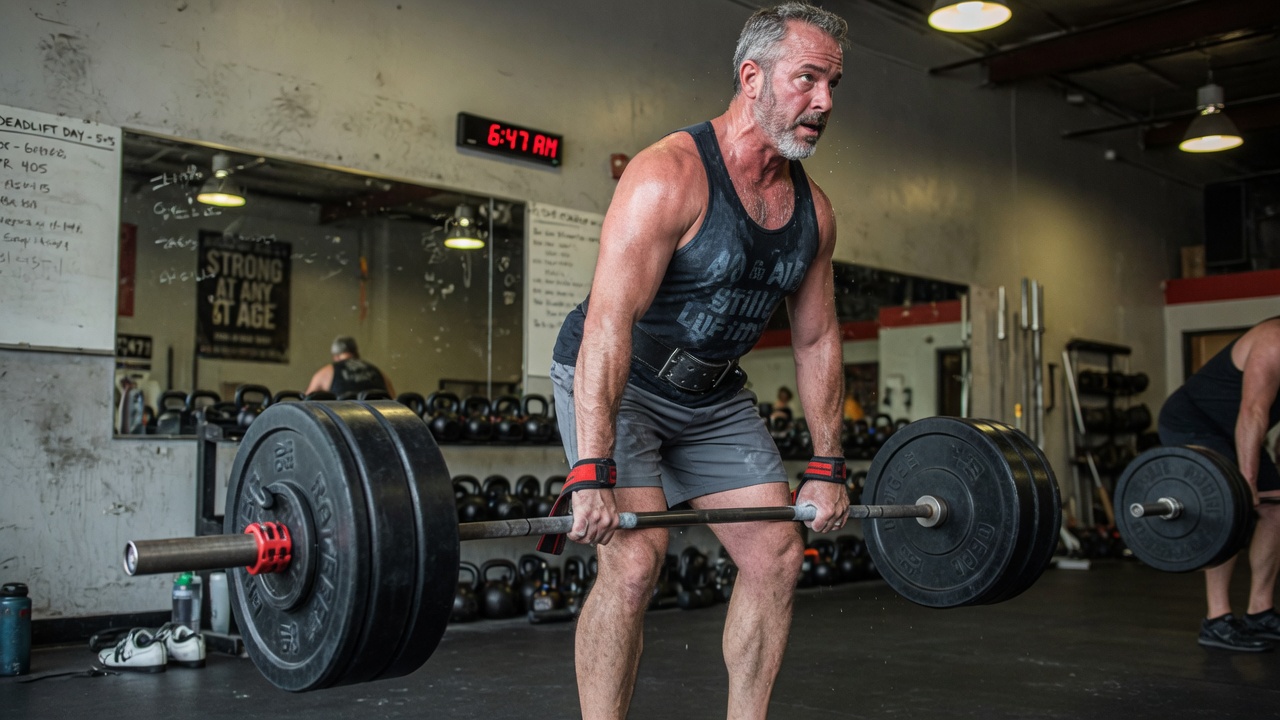
- Deadlifts (picking things up safely)
- Push/pull movements (moving objects)
- Rotational exercises (turning movements)
Balance work becomes crucial after 50. Include single-leg exercises and stability challenges in your routine.
Flexibility training prevents injury and maintains range of motion. Daily stretching keeps joints mobile and muscles pliable.
Cardiovascular endurance shouldn’t be overlooked. Even 20-30 minutes of moderate activity improves heart health.
Overcoming Common Health Challenges
Arthritis shouldn’t stop your fitness journey. Water exercises reduce joint impact while building strength. Start slowly with gentle movements on painful days.
For men with high blood pressure, exercise is often part of the treatment plan. Monitor your numbers and work with your doctor to exercise safely.
Joint pain is common, but proper form prevents further issues. We recommend working with a trainer familiar with older adults’ needs.
Mobility limitations can be addressed through modified exercises. Remember that some movement is always better than none.
Energy levels might fluctuate more than in your younger years. Listen to your body and adjust workout intensity accordingly.
Rest becomes more important after 50. Give muscles adequate recovery time between strength sessions to avoid injury and maximize gains.
Developing Your Workout Routine
Creating an effective workout routine after 50 requires balance, consistency, and attention to your body’s changing needs. The right approach can help you maintain strength, mobility, and overall fitness while minimizing injury risk.
Crafting a Balanced Exercise Plan
A well-rounded fitness plan for men over 50 should include 3-4 workouts per week with adequate rest days between sessions. We recommend focusing on all major muscle groups through a combination of pushing, pulling, and lower body movements.
Try this simple weekly structure:
- Monday: Upper body focus
- Wednesday: Lower body and core
- Friday: Full-body functional movements
Include both compound exercises (movements that work multiple muscle groups) and isolation exercises to maintain muscle balance. Squats, deadlifts, and chest presses are excellent compound movements that deliver the most bang for your buck.
Remember to incorporate mobility work at the beginning of each session. Just 5-10 minutes of dynamic stretching can prepare your muscle fibers for the work ahead.
Incorporating Strength Training Effectively
Strength training becomes increasingly important after 50 to combat natural muscle loss. We suggest training with purpose but moderate intensity.
For best results:
- Start with 2-3 sets of 8-12 repetitions per exercise
- Take 2 seconds to lower weights (eccentric phase)
- Rest 60-90 seconds between sets
- Gradually increase weight when exercises feel too easy
Power training (using lighter weights with more explosive movements) is especially beneficial. Try incorporating 2 power-focused workouts weekly using 3 sets of 6 reps with lighter weights than your regular strength routine.
Listen to your body and adjust as needed. Some days might require lighter weights or fewer sets, and that’s perfectly fine.
Choosing the Right Fitness Equipment
You don’t need a fancy home gym to stay fit after 50. A few versatile pieces of equipment can provide everything needed for effective workouts.
Essential equipment worth investing in:
- A pair of adjustable dumbbells
- Resistance bands of varying tensions
- A stability ball
- A yoga mat for floor exercises
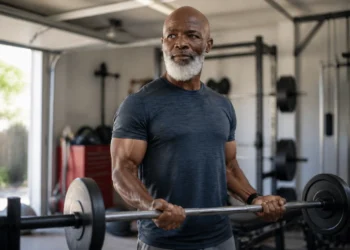
If space and budget allow, consider adding a barbell with weight plates for compound movements like deadlifts and squats. These exercises effectively build functional strength that transfers to daily activities.
For those just starting out, bodyweight exercises can be remarkably effective. Push-ups, squats, and planks require no equipment yet build essential functional strength. You can always add equipment gradually as your fitness journey progresses.
Exercise Demonstrations and Techniques
Learning proper form is essential for functional fitness after 50. These movements build real-world strength while protecting your joints and preventing injuries that can set back your progress.
Mastering Essential Movements
Let’s start with squats, the foundation of lower body strength. Stand with feet shoulder-width apart, toes slightly turned out. Lower your body by pushing your hips back like you’re sitting in a chair. Keep your chest up and knees tracking over your toes – not caving inward.
For beginners, try box squats first. Sit back onto a chair or bench, then stand back up. This builds confidence and proper form.
Bodyweight exercises are perfect for starting out. Push-ups can be modified against a wall or counter if needed. Pull-ups can be assisted with bands or by using a machine at the gym.
Balance work is crucial for men over 50. Try standing on one foot while brushing your teeth or add single-leg deadlifts to your routine. These prevent falls and build functional stability for daily life.
Improving Technique for Injury Prevention
Proper shoulder positioning prevents many common injuries. When doing overhead movements, avoid shrugging your shoulders toward your ears. Instead, keep them “down and back” to protect your rotator cuff.
For barbell bench press, grip the bar slightly wider than shoulder-width. Keep your feet flat on the floor and maintain a slight arch in your lower back. Lower the bar to mid-chest, not your neck or stomach.
Joint-Friendly Modifications:
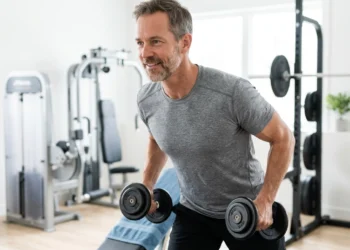
- Use dumbbells instead of barbells for more natural movement
- Incorporate resistance bands for consistent tension with less joint stress
- Perform partial ranges of motion when recovering from injury
Close grip bench press targets your triceps while being gentler on shoulders. Keep your elbows tucked close to your body throughout the movement.
Targeting Muscle Mass and Endurance
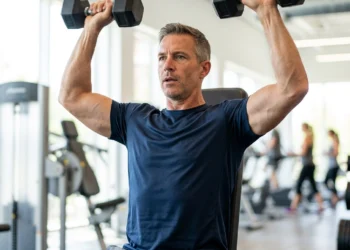
As we age, preserving muscle mass becomes increasingly important. For shoulder development, try seated dumbbell presses with lighter weights and higher reps (12-15). This builds endurance while being easier on joints.
For back and traps, shrugs are excellent. Hold dumbbells at your sides, palms facing your body. Lift your shoulders straight up toward your ears, hold briefly, then lower slowly. Avoid rolling your shoulders, which can cause impingement.
Mix training styles for best results:
- Strength: 3-5 reps with heavier weights
- Hypertrophy: 8-12 reps with moderate weights
- Endurance: 15-20 reps with lighter weights
Remember to control the lowering (eccentric) portion of each exercise. This builds more strength and reduces injury risk. For chest and triceps, try push-ups with a 3-second lowering phase for extra benefit.